Inside the heating stage of carpet and felt moulding lines — and why double decker platens change your output, not just your temperature.
Before a car floor carpet or NVH felt part is formed, it has to be heated evenly through its full thickness. Get that step wrong — hot spots, cold cores, scorched surfaces — and no amount of care at the forming press will fix an inconsistent part. This is the job of the contact heating press, and it's more central to part quality than most buyers expect.
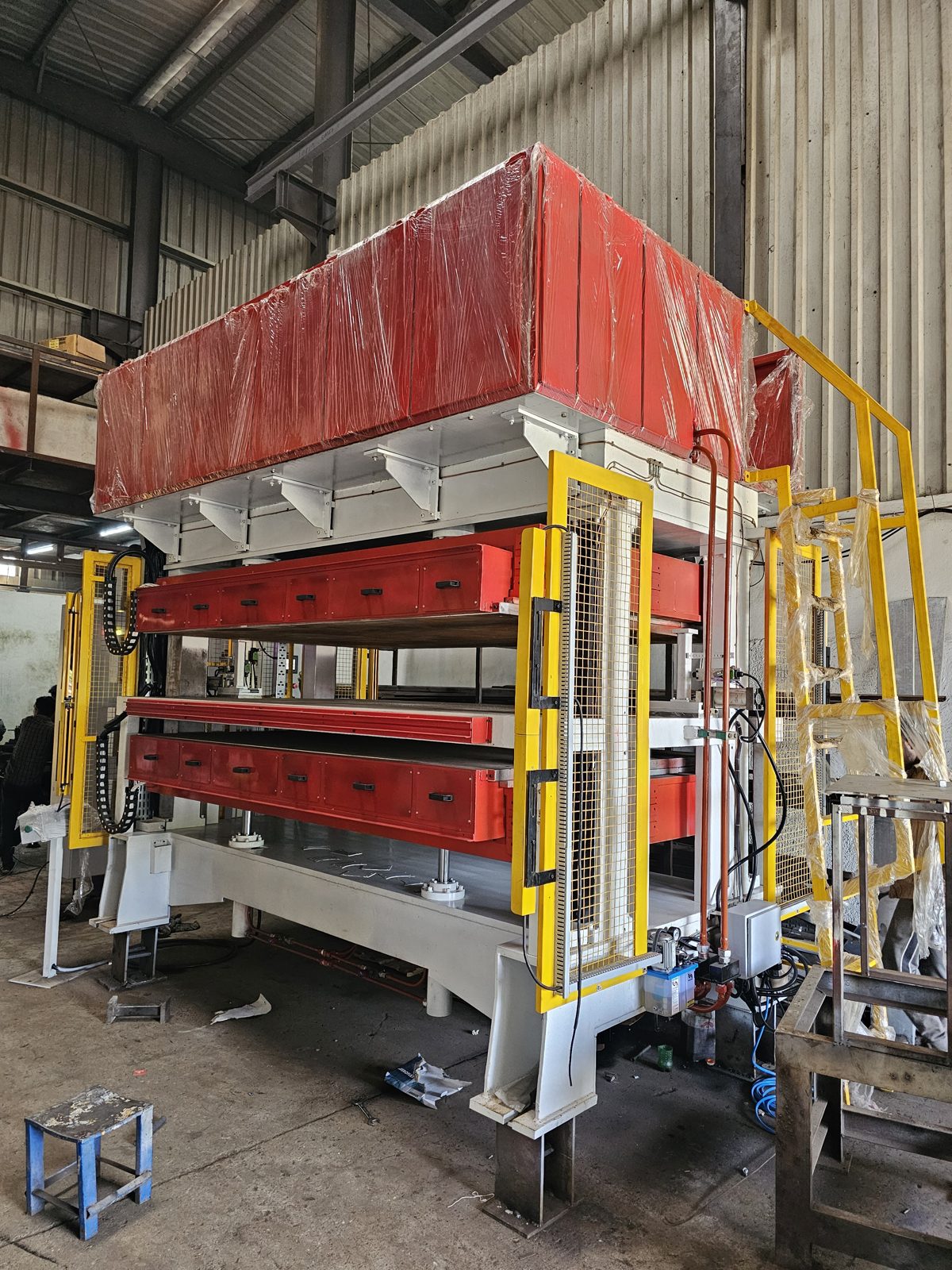
Needle-punched carpets, resin felt, and thinsulate packs are often thick and dense — hot air in an oven struggles to heat the core evenly in a reasonable cycle time, and can scorch the surface before the middle is ready. A contact heating press applies heat directly through both platen faces, so heat conducts into the material from both sides simultaneously, reaching a uniform core temperature faster and more predictably.
A single-platen heating press can only heat one sheet at a time, which idles your forming press between cycles waiting for the next heated blank. A double decker press stacks two independent heating levels in the same frame and footprint — one sheet heats while the previous one is already being formed. That overlap is what roughly doubles throughput without doubling floor space or headcount.
The same heating principle applies across most NVH and interior trim materials:
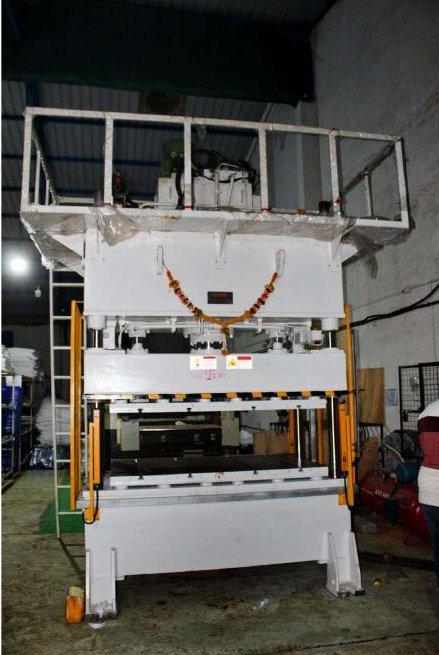
Bed size against your largest sheet, platen temperature range for your material, and whether single or double decker makes sense for your forming press cycle time — these three decisions cover most of what determines whether the press fits your line or becomes its bottleneck. PLC control with recipe storage per part number is worth insisting on; it keeps every operator, every shift, producing the same result.
Our double decker contact heating presses run in production today at automotive interior and sealing component manufacturers, including an export unit supplied to Paracoat Becchis EMEA in Morocco. Built in Chakan, Pune, to your bed size and temperature range. See the full contact heating press page or browse all machines.
 SOKIM
SOKIM